Self-Test D-1.4 Describe the Methods of Protecting Piping
Complete Self-Test D-1.4 and check your answers.
- What can be done to protect a pipe from internal corrosion?
- Polymer coating
- Polyester fibre coating
- Sandblasting
- Laminar flow
- What determines the type of external coatings applied to a pipe?
- Velocity of the fluid
- Colour of the piping
- Thickness of the pipe wall
- Expected damage
- What is used to protect pipes from damage caused by rocky backfill?
- Treated wood
- Rock guards
- Rock screen mesh
- Mastic coating
- What is the purpose of a transition sleeve?
- To join two pipes of different materials
- To protect underground welded joints
- To join two pipes of different diameters
- To provide internal alignment of pipe joints
- What does constant circulation prevent?
- Turbulence
- Oxidation
- Freezing
- Corrosion
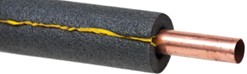
- What type of pipe insulation is shown in Figure 1?
- Closed-cell poly
- Rock wool
- Fibreglass
- Mineral wool
- Which of the following terms is used to describe the application of heat with an electric cable to prevent a pipe from freezing?
- Circulation
- Insulation
- Boxing in
- Heat trace
- Which of the following is an example of rigid pipe insulation?
- Rock wool
- Heat trace
- Styrofoam
- Mineral wool
- Which of the following is installed to prevent punctures of piping passing through wood studs?
- Rock wool
- Steel plates
- Plastic grommets
- Closed-cell poly
- Which piping material needs protection against ultraviolet light when in storage?
- Copper
- PEX
- PVC
- Fibreglass
- Under what conditions can condensation form on a pipe?
- Pipe warmer than the ambient air temperature
- Pipe colder than the ambient air temperature
- Heavily insulated pipe
- Low-humidity air and a warm pipe
- What can be done to prevent condensation on piping?
- Enclose the pipe in a wall
- Apply reflective moisture paint
- Reduce moisture content in the air
- Increase moisture content in the air
- What is the purpose of a pipe expansion joint?
- Prevent expansion
- Keep the pipe cool
- Increase expansion range
- Control expansion
- What is the purpose of a pipe guide?
- Allow the pipe to buckle
- Keep the pipe in line
- Support the pipe
- Show where the pipe is located
- What is the minimum number of elbows in a swing joint?
- 1
- 2
- 3
- 4
- A 40 m (43.7 yards) copper pipe is heated from 8 to 61°C (46 to 142°F). The thermal expansion coefficient is 0.0000166 per degree Celsius (0.0000093 per degree Fahrenheit).
What is the total expansion of the pipe, expressed in metres?- 0.352
- 0.035
- 0.532
- 0.875
- Which of the following terms is used to identify corrosion protection for pipe caused by an electrochemical reaction?
- Anodic protection
- Cathodic protection
- Electrolysis
- Galvanic
- Which metal is the least noble?
- Copper
- Stainless steel
- Magnesium
- Brass
-
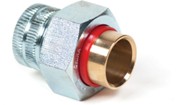
Figure 2 Example fitting What is the name given to the fitting in Figure 2?
- Galvanized union
- Stainless coupling
- Eccentric reducer coupling
- Dielectric union
Answer Key: Self-Test D-1.4 is on the next page.